



How Permanent Magnetic Speed Regulator Improves Motor Efficiency and Reduces Heat
2026-06-04 10:52How Permanent Magnetic Speed Regulator Improves Motor Efficiency and Reduces Heat
In many industrial drives, motors run at fixed speed while the load requires variable flow or pressure. Traditional throttling methods waste energy, and variable frequency drives (VFDs) can be sensitive to heat, dust, and harmonics. An alternative technology – the permanent magnetic speed regulator – offers a robust, efficient way to control motor output without electrical complexity. While a Fluid coupling uses hydraulic fluid for speed control, a permanent magnetic speed regulator uses magnetic fields across an air gap. Both are mechanical solutions, but the magnetic regulator has unique advantages for certain applications. This article explains how a permanent magnetic speed regulator works, how it improves motor efficiency, and how it compares to Hydrodynamic couplings and VFDs.
What Is a Permanent Magnetic Speed Regulator?
A permanent magnetic speed regulator consists of two main parts: a conductor rotor (connected to the motor) and a permanent magnet rotor (connected to the load). An air gap separates them. By adjusting the air gap – either mechanically or with an actuator – the magnetic coupling strength changes, varying the output speed. When the gap is small, most of the motor torque is transmitted; when the gap is larger, slip increases, and output speed drops. This mechanical speed control is highly efficient because there is no electrical conversion. Unlike a Fluid coupling, which relies on hydraulic oil, the magnetic regulator is oil‑free and leak‑free. However, a Hydrodynamic coupling typically handles higher power and offers better thermal management for frequent start‑stop cycles.
How It Improves Motor Efficiency
In fixed-speed motor drives with throttling valves or dampers, the motor runs at full load even when the pump or fan delivers reduced flow. This wastes a large amount of energy. A permanent magnetic speed regulator allows the motor to run at near full speed while the regulator reduces the torque transmitted to the load. The motor itself remains highly efficient because it operates at its design point, while the regulator dissipates the excess energy as heat (usually via the conductor rotor’s cooling fins). For a pump running at 80% speed, the power saving is approximately 50% compared to throttling, because the load power follows the affinity laws. This translates directly into lower electricity bills and reduced carbon footprint.
Compared to a Fluid coupling, the permanent magnetic speed regulator has similar efficiency at full load (slip of 2–5%) but may have slightly higher losses at partial load because the magnetic field requires a larger air gap. However, it has the advantage of being completely oil‑free, which is attractive in food processing, chemical, or clean room environments where oil contamination is unacceptable. For heavy mining or steel applications, Hydrodynamic couplings remain the preferred choice due to their ruggedness and superior heat dissipation.
Heat Reduction and Environmental Benefits
One of the biggest challenges with VFDs is that they generate electrical harmonics and require air‑conditioned enclosures in hot, dusty environments. A permanent magnetic speed regulator generates no harmonics and can operate in ambient temperatures up to 60°C without derating. The heat generated by slip is dissipated through the conductor rotor’s integrated cooling fins, which are self‑cooling. There is no need for external fans or cooling water. This makes the magnetic regulator ideal for retrofit projects where adding a VFD would require expensive electrical upgrades or new cabinets. However, for applications with very high power or frequent starts, a Fluid coupling may still be more cost‑effective because it can handle thermal shocks better and has a lower initial cost per kilowatt.
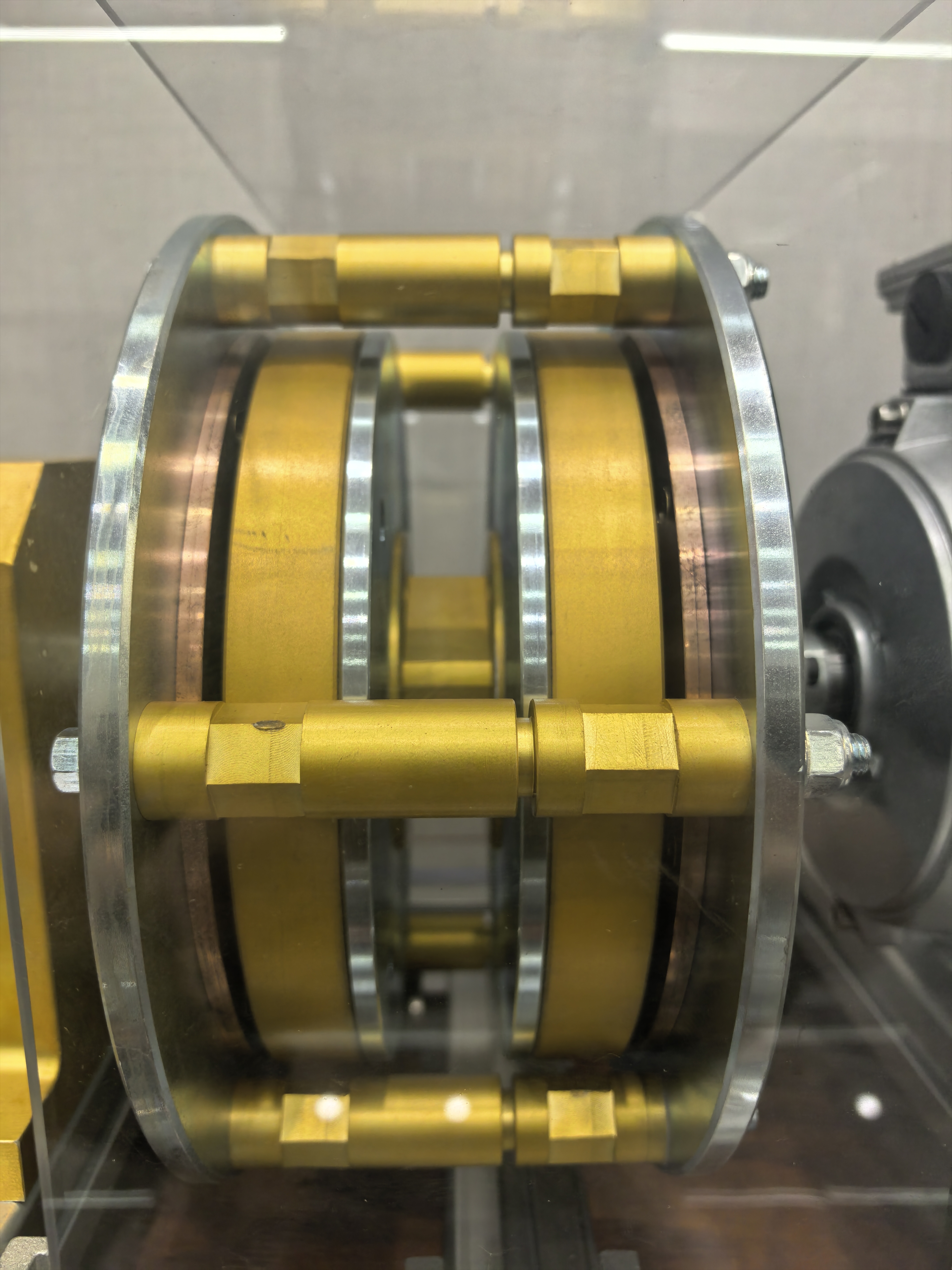
Comparison with Fluid Coupling and VFD
Permanent magnetic regulator: Oil‑free, compact at low power, no harmonics, good for clean environments, limited power range (typically up to 500 kW).
Fluid coupling (variable‑fill): Higher power capability (up to several MW), excellent heat dissipation, tolerant of dust and vibration, requires oil changes.
VFD: Full speed range (0–100%), high efficiency at partial load, but sensitive to heat, dust, and harmonics; higher initial cost for large motors.
For a 200 kW fan application, a permanent magnetic speed regulator can save approximately $30,000 per year in electricity compared to damper control, with payback under 12 months. For a 500 kW conveyor or crusher, a variable‑fill Hydrodynamic coupling may be more robust and cost‑effective.
Conclusion: Choose the Right Technology for Your Needs
Permanent magnetic speed regulators are an excellent choice for variable‑torque loads (pumps, fans) in clean or space‑constrained environments, where oil leakage is unacceptable. For heavy‑duty, high‑power, or high‑inertia applications, a Fluid coupling remains the industry standard. Dalian Mairuisheng offers both technologies – permanent magnetic couplings and Hydrodynamic couplings – and our engineers can help you select the best solution based on your power, duty cycle, and environmental conditions. Contact us for a free energy saving assessment.