


Dual-Chamber Fluid Coupling – Built-in Redundancy for Mission-Critical Mining Equipment
2026-06-03 15:20Dual-Chamber Fluid Coupling – Built-in Redundancy for Mission-Critical Mining Equipment
In mining operations, unplanned downtime is measured in millions of dollars per day. When a main shaft hoist, a long overland conveyor, or a SAG mill drive fails, the entire production line stops. Standard Fluid couplings already offer excellent soft-start and overload protection, but what if one component fails? Dalian Mairuisheng has engineered a solution: the dual-chamber Fluid coupling. This advanced Hydrodynamic coupling incorporates two independent working chambers within a single housing. If one chamber loses oil or suffers seal damage, the other chamber continues to transmit partial torque, allowing the equipment to run until scheduled maintenance. This article explains how dual-chamber Fluid couplings provide built-in redundancy for mission-critical applications.
What Is a Dual-Chamber Fluid Coupling?
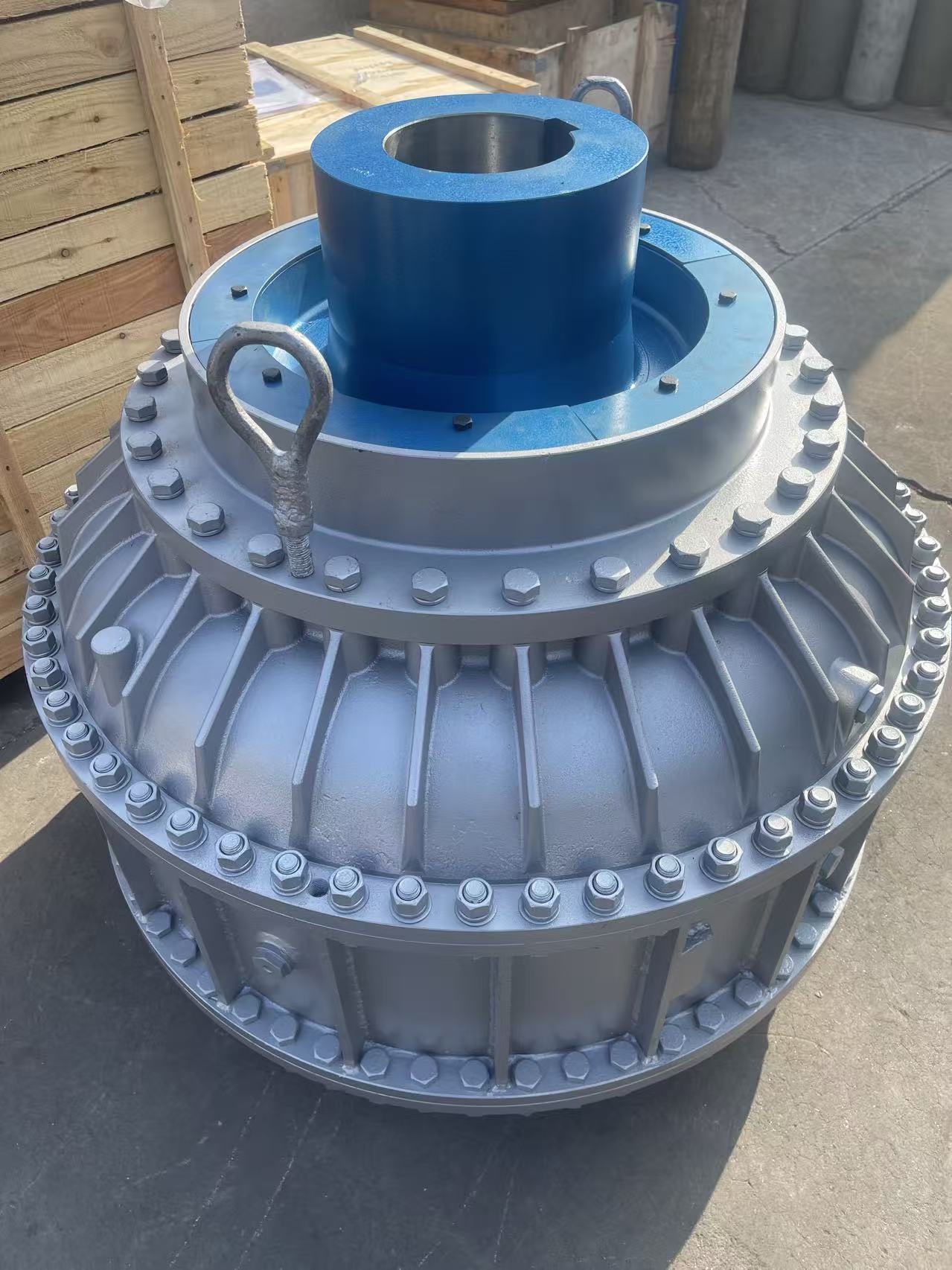
A standard Fluid coupling has one pump wheel and one turbine in a single chamber. A dual-chamber Hydrodynamic coupling uses two separate sets of pump wheels and turbines arranged in parallel within the same housing. Each chamber has its own oil supply and seals. The input shaft drives both pump wheels simultaneously, and both turbines drive the common output shaft. Under normal operation, both chambers share the load, each transmitting approximately 50% of the torque. If one chamber loses its oil (due to a seal leak or external damage), the other chamber continues to operate, albeit with reduced torque capacity. This redundancy is invaluable for equipment that cannot tolerate sudden stops.
Why Redundancy Matters in Mining
Consider a mine's main hoist or an overland conveyor that runs 24/7. A single seal failure in a standard Fluid coupling would cause the coupling to lose oil, overheat, and stop transmitting torque. The conveyor would jam, and production would halt. With a dual-chamber Fluid coupling, the same seal failure only affects one chamber. The other chamber continues to provide torque, allowing the conveyor to run at reduced speed or with reduced load until a planned shutdown. This "limp-home" capability can save millions in lost production. The dual-chamber Hydrodynamic coupling also offers better heat dissipation because the two chambers provide double the surface area for cooling, making it ideal for high-cycling applications.
Real-World Application: Underground Mine Hoist
A zinc mine in Sweden operated a 500 kW friction hoist for moving ore and personnel. The original Fluid coupling failed twice in one year due to seal wear, each time causing a 48-hour production stop. After replacing it with a Dalian Mairuisheng dual-chamber Fluid coupling, the mine experienced one seal leak on one chamber after 14 months. The hoist continued to operate at 55% torque capacity, allowing the mine to schedule a repair during a planned maintenance shift. No unplanned downtime occurred. The mine calculated that the dual-chamber Hydrodynamic coupling paid for itself in saved production losses within eight months.
• Standard Fluid coupling: single seal failure → 48 hours downtime → $500,000 loss.
• Dual-chamber Fluid coupling: single seal failure → continue operation at reduced torque → $0 loss until scheduled repair.
Additional Advantages of Dual-Chamber Hydrodynamic Couplings
Beyond redundancy, the dual-chamber Fluid coupling offers higher torque density. Because two chambers share the load, the overall size can be smaller than a single-chamber coupling for the same power. This is valuable in space-constrained equipment. The dual-chamber design also doubles the heat dissipation area, so the Fluid coupling can handle more frequent start-stop cycles without overheating. Furthermore, the independent chambers provide a degree of vibration damping that is superior to standard designs. Dalian Mairuisheng manufactures dual-chamber Hydrodynamic couplings in sizes from 400 to 1150, covering power ranges from 45 kW to over 1,000 kW.
Applications Ideal for Dual-Chamber Fluid Couplings
The dual-chamber Fluid coupling is particularly suited for:
Main mine hoists and winches
Long overland belt conveyors (single-drive or multi-drive)
SAG mills and ball mills in remote locations
Underground ventilation fans
Ship propulsion and offshore cranes
In each case, the cost of unplanned downtime is extremely high, justifying the investment in a redundant Hydrodynamic coupling. Dalian Mairuisheng provides full technical support, including custom mounting dimensions and special materials for corrosive or high-temperature environments.
Conclusion: Upgrade to Redundancy
If your mining or heavy industrial process cannot afford unexpected stops, a dual-chamber Fluid coupling is the right choice. It combines all the benefits of a standard Hydrodynamic coupling – soft start, overload protection, vibration damping – with the added security of built-in redundancy. Contact Dalian Mairuisheng today for a free application review. Our engineers will help you select the optimal dual-chamber Fluid coupling for your mission-critical equipment, complete with one-year warranty and full after-sales support.