

Comparing Fluid Coupling with Brake Disc vs. Traditional Braking Systems
2026-04-20 15:22Comparing Fluid Coupling with Brake Disc vs. Traditional Braking Systems
In modern industrial power transmission, integrating braking directly into the drive system significantly improves reliability and efficiency. The Fluid coupling with an integrated brake disc represents a major advancement over traditional braking arrangements, which typically rely on separate components mounted on motor shafts. This article compares the integrated Hydrodynamic couplings design with conventional systems, explaining why this Coupling solution is rapidly gaining adoption across mining, lifting, manufacturing, and marine industries.
What Is a Fluid Coupling with Brake Disc?
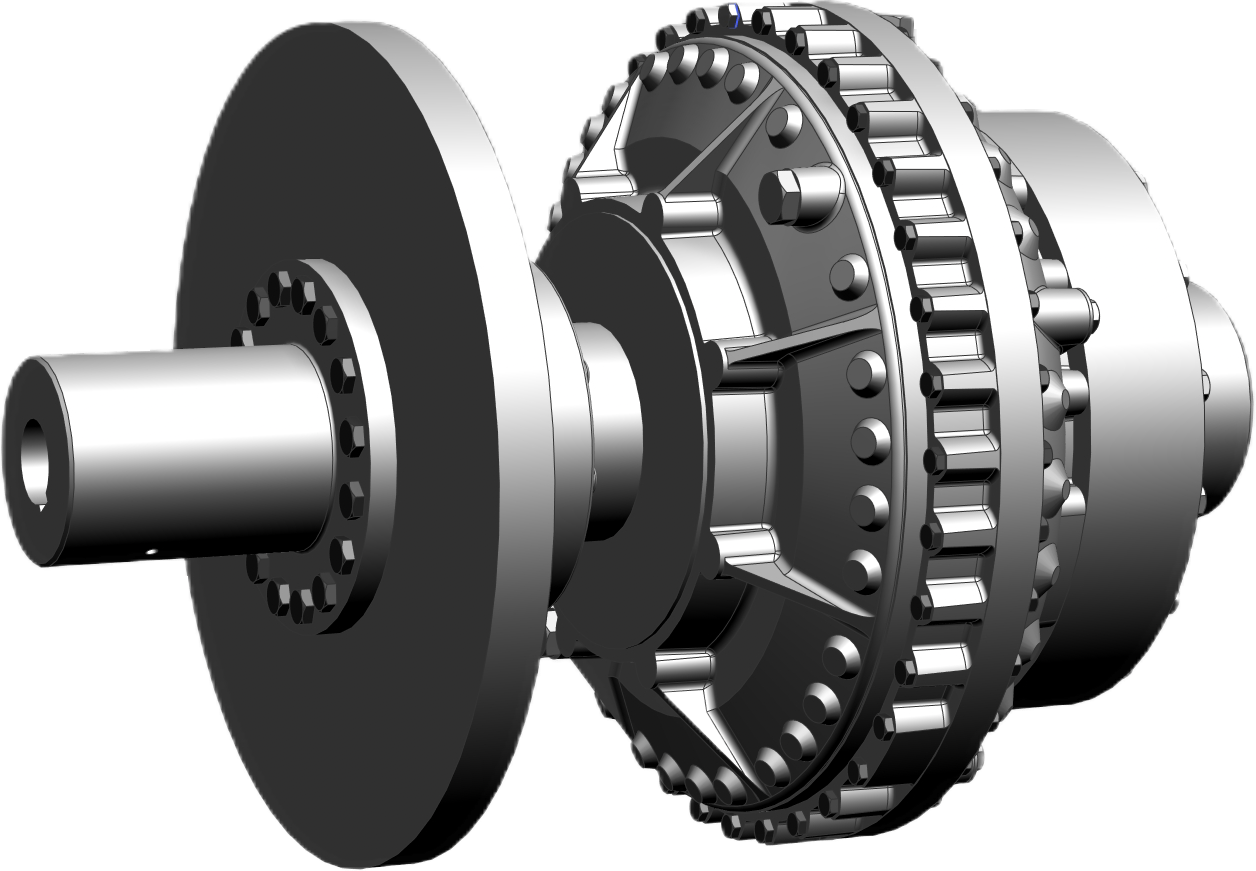
A Fluid coupling with brake disc combines hydraulic power transmission with mechanical braking in one unit. Building on the proven benefits of ordinary Hydrodynamic couplings—smooth starting, overload protection, and vibration damping—it adds a built-in brake disc for active, controllable braking. The Coupling consists of three core components: pump wheel, turbine, and the integrated brake disc mounted on the output section. During normal operation, the Fluid coupling transmits torque via fluid. When braking is required, an external caliper clamps the disc, providing a controlled stop. This dual-function design makes the Coupling ideal for equipment needing precise stopping and frequent start-stop cycles.
Traditional Braking Systems: Limitations
Traditional braking systems mount a separate brake disc or drum directly on the motor shaft extension or gearbox input. While this has been used for decades, it has inherent drawbacks. First, it requires additional mounting space, often leading to longer shafts and larger equipment footprints. Second, braking shocks are transmitted directly through the drivetrain, because there is no Coupling to absorb them. Third, traditional dry brakes suffer from severe heat buildup—temperatures can exceed 400°C—causing brake fade, accelerated friction wear, and frequent maintenance. The integrated Fluid coupling design overcomes all these issues.
Key Comparison: Integrated Fluid Coupling vs. Traditional Braking
1. Installation Space and System Complexity
The integrated Fluid coupling dramatically reduces component count. By combining the brake disc into the Coupling housing, manufacturers eliminate separate brackets, extended shafts, and alignment procedures. Traditional systems require a separate brake disc plus a separate Coupling—doubling the number of parts and potential failure points. For space-constrained applications like mobile equipment or offshore platforms, the integrated Hydrodynamic coupling is clearly superior.
2. Vibration Damping and Shock Protection
One of the greatest advantages of a Fluid coupling with brake disc is its ability to maintain vibration damping during braking. The fluid medium absorbs a portion of the kinetic energy, cushioning the stop and reducing shock to gearboxes and bearings. Traditional rigid systems transmit braking shocks directly, accelerating wear. The oil shear technology of a Coupling provides a smooth "cushioned" stop, extending the life of downstream components.
3. Heat Dissipation and Thermal Management
Heat is the biggest enemy of any brake. Traditional dry brakes overheat quickly, leading to fade and frequent maintenance. The Fluid coupling with brake disc uses the circulating hydraulic fluid to actively cool the disc, drawing heat away from the friction interface. This ensures stable operation under continuous heavy-duty and high-frequency braking—critical for cranes, hoists, downhill conveyors, and other regenerative applications. A 1700-meter regenerative conveyor using a Fluid coupling with proportional brake control demonstrated perfect thermal management.
4. Maintenance Requirements and Service Life
Traditional dry brakes need regular pad replacement, clearance adjustment, and cleaning of brake dust. In contrast, the Fluid coupling with brake disc is designed for minimal upkeep. The fluid lubricates moving parts and reduces wear. Real-world results from overhead crane installations show more than 2 hours per week reduction in preventative maintenance, and elimination of $8,000 annually in service-parts expenditures. The elimination of wear significantly increases service life and virtually eliminates adjustment.
5. Application Flexibility and Customization
The modular design of the Fluid coupling allows flexible brake disc configurations—diameter, material, lining type, and actuation (pneumatic, hydraulic, or spring-applied). Mounting options and sealing can be adapted for harsh or explosive environments. Traditional systems offer limited customization without significant engineering cost.
Comparison Table
| Feature | Fluid Coupling with Brake Disc | Traditional Braking System |
|---|---|---|
| Installation Space | Compact, integrated | Separate disc + brackets |
| Vibration Damping | Fluid absorbs shock | No damping |
| Heat Dissipation | Active fluid cooling | Passive air, prone to fade |
| Maintenance Frequency | Minimal | Frequent pad replacement |
| Component Count | Single unit | Disc + separate Coupling |
| Overload Protection | Built-in via fluid slip | Requires external limiter |
Application Scenarios
The Fluid coupling with brake disc excels in mining conveyors, crushers, hoists, elevators, cranes, winches, marine propulsion, and railway equipment. It provides smooth deceleration, precise stopping, and overload protection. In frequent start-stop applications like overhead cranes, the integrated Hydrodynamic coupling reduces maintenance by over 2 hours per week and saves $8,000 annually in parts. For downhill conveyors, the Coupling manages both driving and retarding forces while keeping temperatures under control.
Why Choose Dalian Mairuisheng?
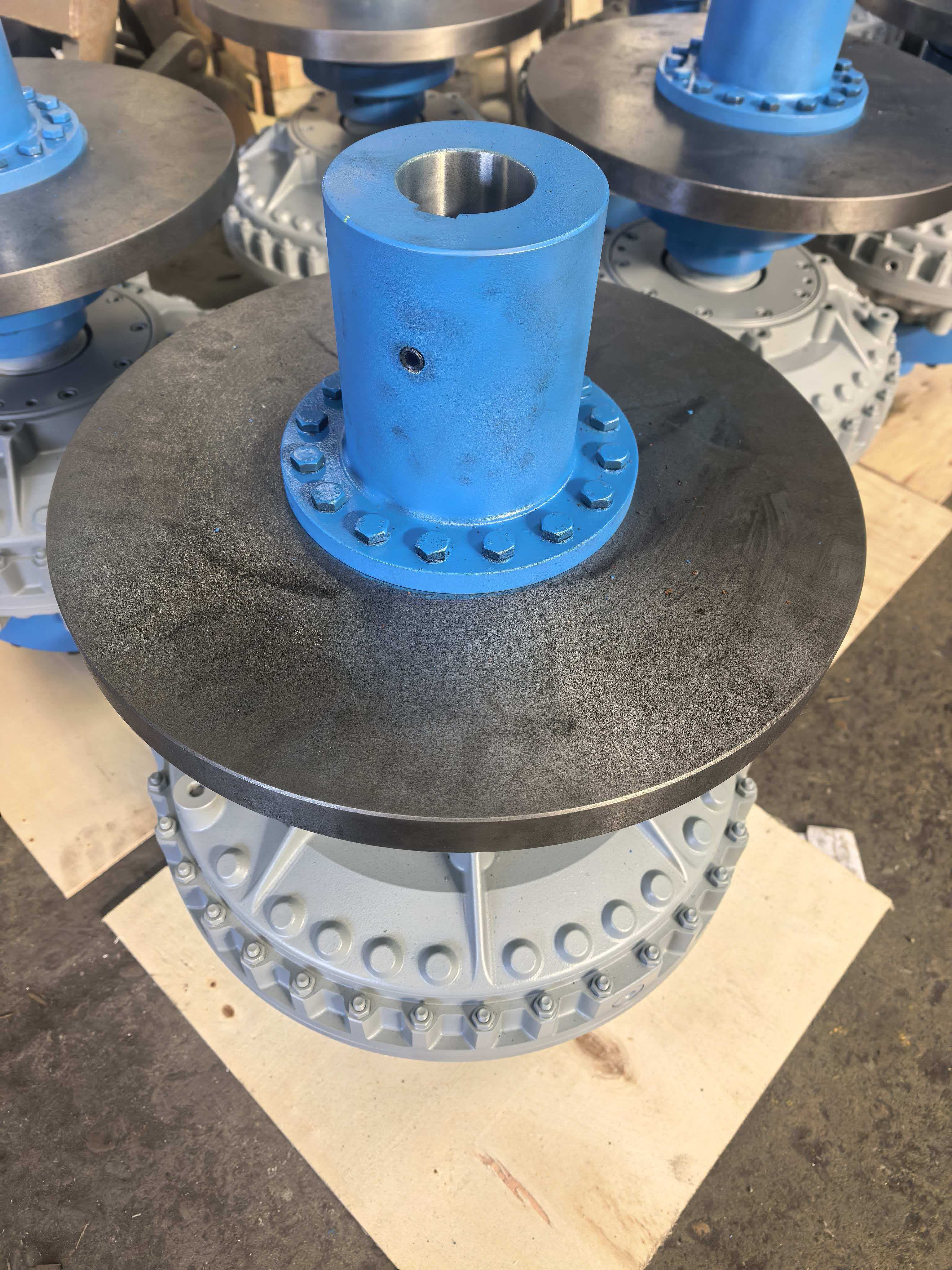
With over 15 years of experience, Dalian Mairuisheng is a specialized manufacturer of Fluid coupling systems. Our ISO 9001-certified facility produces a full range of Hydrodynamic couplings, including YOX series, dual-chamber models, and brake disc-integrated units. We customize brake disc diameter, material, lining, and actuation to your exact needs. We also provide full after-sales support: installation guidance, maintenance training, and technical consultation. Contact us for a free pre-sales load analysis.