


Why High-Temperature Resistant Fluid Coupling Matters in Steel and Cement Plants
2026-05-12 14:56Why High-Temperature Resistant Fluid Coupling Matters in Steel and Cement Plants
Steel mills and cement plants are among the harshest industrial environments for power transmission equipment. Ambient temperatures often exceed 50°C, with radiant heat from furnaces and kilns pushing surface temperatures even higher. In such conditions, a standard Fluid coupling can fail prematurely due to oil degradation, seal hardening, or housing distortion. This article explains why high-temperature resistant Hydrodynamic couplings are essential for reliable operation in these industries and how features like special seals, advanced fluids, and robust cooling ensure long service life. We also discuss the role of a Torque Converter-style design in protecting motors and driven machinery under extreme thermal stress.
The Heat Challenge in Steel & Cement
In a steel mill, a Fluid coupling might be installed near a reheat furnace, a rolling mill, or a caster. Radiant heat can raise the coupling housing to 90–100°C. Similarly, in a cement plant, bucket elevators, belt conveyors, and kiln drives operate in dusty, high-temperature environments. Standard Hydrodynamic couplings with nitrile rubber seals and standard hydraulic oil cannot withstand such conditions for long. The result: oil leaks, reduced torque transmission, and unplanned downtime. A high-temperature resistant Fluid coupling addresses these issues with Viton® seals, high-viscosity-index synthetic fluids, and thermally stable housing materials.
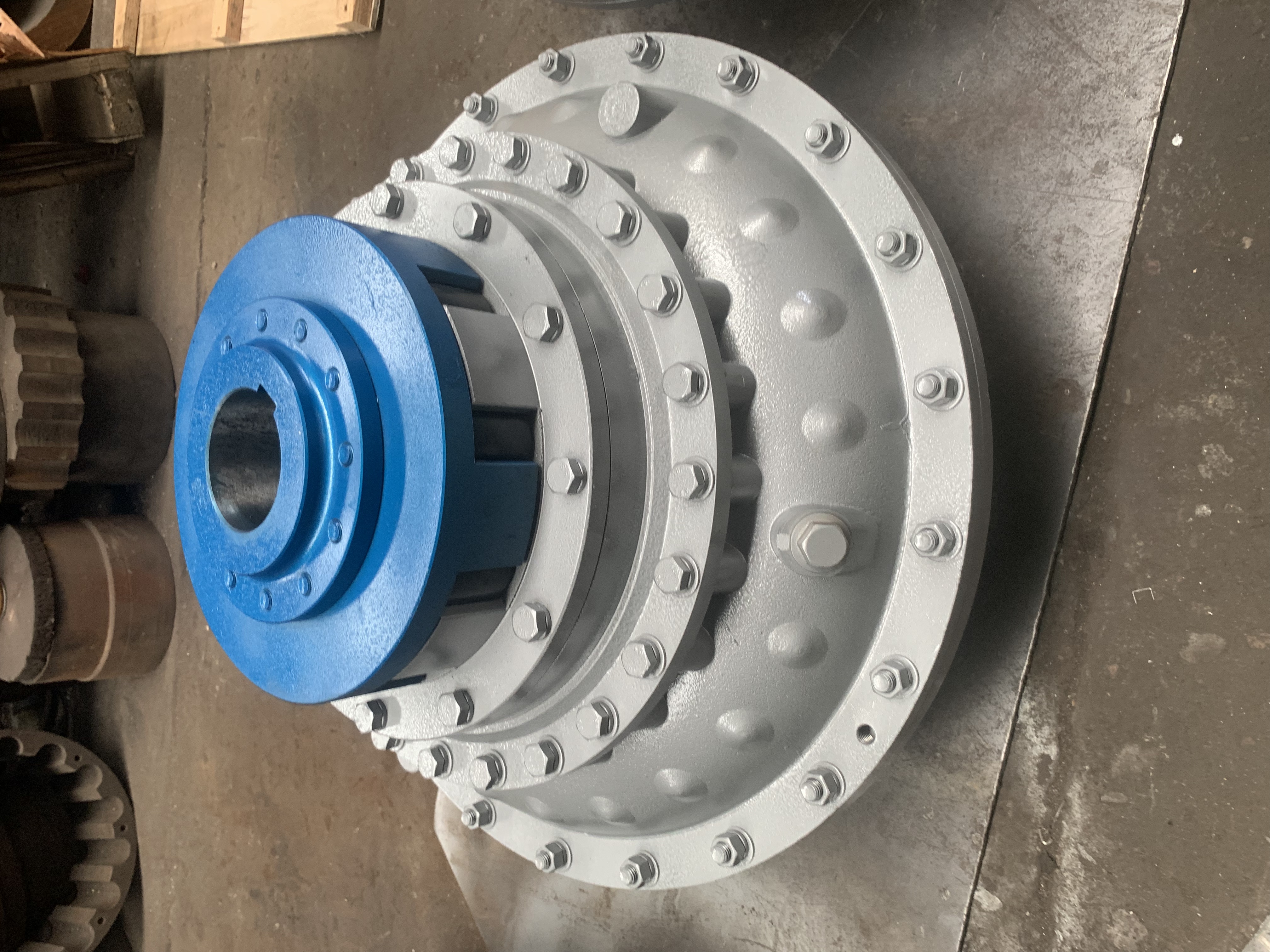
Design Features of High-Temperature Fluid Couplings
Dalian Mairuisheng offers a range of Fluid couplings specifically designed for hot environments:
Viton® or FKM seals – withstand continuous exposure to 200°C, compared to standard NBR seals which harden above 100°C.
High-temperature synthetic oil – maintains viscosity and lubricity even at 120°C, preventing film breakdown and wear.
Heat-resistant housing coating – reflective paint or ceramic coating reduces heat absorption.
Optional cooling coils – for extreme applications, external water or air cooling can be integrated.
Oversized bearing chambers – allowing better heat dissipation and accommodating thermal expansion.
These features ensure that the Hydrodynamic coupling continues to provide soft start, overload protection, and vibration damping even when ambient temperatures soar above 60°C. The Torque Converter action – where fluid slip automatically limits torque – remains effective, protecting motors from stalling due to high thermal loads.
Real-World Application: Cement Mill Bucket Elevator
A cement plant in Vietnam operated a bucket elevator feeding a vertical roller mill. The drive used a standard Fluid coupling, but during summer months, the coupling surface temperature reached 95°C. After six months, the seal failed, oil leaked onto the brake disc, and the elevator jammed, causing 24 hours of downtime. Dalian Mairuisheng supplied a high-temperature version of our YOX series Fluid coupling with Viton seals and synthetic oil. After installation, the coupling surface temperature stabilized at 88°C, no leaks occurred, and the elevator ran for 16 months without any coupling-related issues. The plant has since upgraded five more drives.
Why Standard Couplings Fail in High Heat
Many plant engineers assume that any Coupling will work as long as the motor is not overloaded. However, heat degrades three critical components: seals lose elasticity and crack; hydraulic oil oxidizes and forms sludge; and the housing expands, altering internal clearances. In a Hydrodynamic coupling, proper oil viscosity is essential for torque transmission. When oil thins due to heat, slip increases, causing more heat – a vicious cycle. A high-temperature Fluid coupling breaks this cycle with thermally stable materials and fluids. The Torque Converter region remains predictable, and the coupling continues to limit starting currents and protect gearboxes.
Selecting the Right High-Temperature Fluid Coupling
When specifying a Fluid coupling for steel or cement applications, consider:
Peak ambient temperature near the coupling (not just the plant average).
Radiant heat sources (furnaces, kilns, hot material streams).
Dust and contamination – fine cement dust can clog cooling fins; use enclosed designs.
Starting frequency – frequent starts generate additional internal heat.
Dalian Mairuisheng engineers can analyze your operating conditions and recommend the optimal Fluid coupling configuration, including special fill fluids, upgraded seals, and optional cooling. Our high-temperature Hydrodynamic couplings are available in sizes from 274 to 1150, covering power ranges from 5 kW to over 500 kW. All units are tested under elevated temperatures before shipment and come with a one-year warranty.
Conclusion: Don’t Let Heat Ruin Your Drivetrain
Steel and cement plants cannot afford frequent coupling failures. Investing in a high-temperature resistant Fluid coupling pays for itself through reduced downtime, extended fluid life, and protection of downstream gearboxes and motors. Dalian Mairuisheng combines over 15 years of experience with proven designs for hot environments. Contact us today for a free assessment of your high-temperature drive applications.