

Using Fluid Coupling in Marine Dredging and Offshore Equipment
2026-06-11 09:32Using Fluid Coupling in Marine Dredging and Offshore Equipment
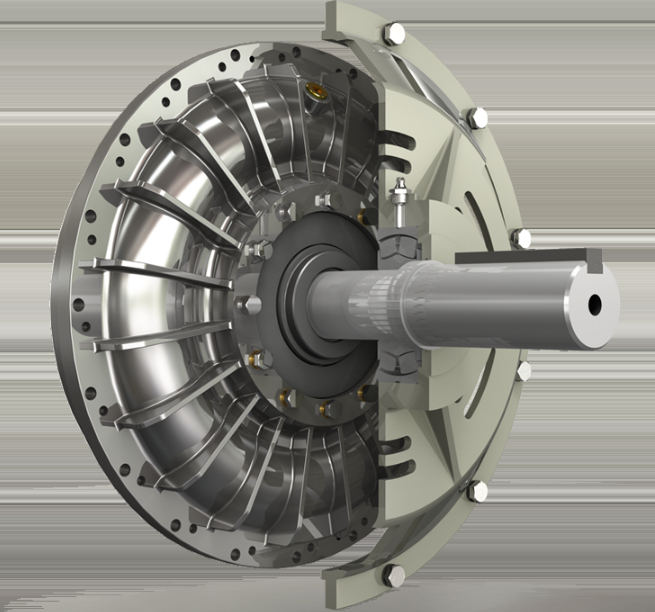
Marine dredging and offshore equipment operate in one of the most challenging environments: saltwater, high humidity, shock loads from waves, and abrasive slurries. Dredge pumps, cutter drives, winches, and deck machinery must start and stop frequently, often under high inertia and with sudden overloads. A Fluid coupling is ideally suited to these conditions. Unlike rigid couplings or direct drives, a Hydrodynamic coupling provides smooth, shock‑free acceleration, inherent overload protection, and excellent vibration damping – all in a sealed, corrosion‑resistant housing. This article explains why Fluid couplings are the preferred power transmission solution for dredgers, offshore supply vessels, and marine cranes, and how they extend equipment life while reducing maintenance.
Challenges of Marine Dredging Drives
A dredge pump drive faces extreme conditions. The pump must handle sand, gravel, and rocks, causing continuous torque fluctuations and sudden load spikes when a large particle enters the impeller. Starting a dredge pump directly can generate a torque spike 6‑8 times the rated motor torque, which can twist shafts, damage gearboxes, and crack pump casings. A Fluid coupling solves this by limiting starting torque and allowing the motor to accelerate under low load. The Hydrodynamic coupling gradually transfers torque to the pump, eliminating shock. If the pump jams, the Fluid coupling slips, limiting torque and preventing motor stall or shaft breakage. This built‑in “fuse” protection is invaluable in dredging, where jams are frequent.
Protecting Winches and Towing Systems
Offshore winches and towing systems require precise control and smooth starts to avoid shock loading of cables and anchors. A direct‑on‑line winch drive can snatch the cable, causing wire rope damage or even breakage. A Fluid coupling provides a controlled, gradual pull, significantly reducing peak cable tension. For anchoring systems that must hold a vessel in position, a Fluid coupling with a brake wheel or brake disc offers both soft start and positive holding. When the brake applies, the Hydrodynamic coupling continues to slip, absorbing kinetic energy and providing a cushioned stop – much gentler on the deck structure. For dynamic positioning (DP) winches, the inherent damping of a Fluid coupling reduces cable snatch caused by wave‑induced vessel motion.
Corrosion Resistance and Reliability
Marine equipment demands corrosion protection. Dalian Mairuisheng manufactures Fluid couplings for offshore use with special coatings (epoxy or marine-grade paint) and stainless steel input/output shafts. Seals are upgraded to double‑lip Viton® to withstand saltwater spray and high humidity. The housing can be made from nodular cast iron or fabricated steel with enhanced corrosion allowance. Unlike electronic soft starters or VFDs, a Fluid coupling has no sensitive electronics to fail in a wet environment. The Hydrodynamic coupling is purely mechanical and hydraulic, making it highly reliable for long‑duration offshore voyages. Many Fluid couplings on dredgers operate for 10‑15 years with only periodic oil changes – a testament to their ruggedness.
Real‑World Case: Cutter Suction Dredger in Indonesia
A cutter suction dredger operating in the Java Sea experienced frequent gearbox failures on its 800 kW cutter drive. The original rigid coupling transmitted full shock loads from the cutter head to the gearbox, causing tooth breakage every 8‑10 months. After installing a Dalian Mairuisheng YOX‑875 Fluid coupling with a delayed filling chamber, the cutter drive started smoothly over 25 seconds, and shock loads were reduced by over 60%. The gearbox has now operated for 32 months without failure. The dredger also installed Fluid couplings on the two main dredge pumps, eliminating motor overload trips that previously occurred when large stones entered the pump. The maintenance superintendent commented: “The Fluid coupling has been a game changer. We no longer worry about torque spikes – the coupling just slips and protects everything downstream.”
• Cutter gearbox failures reduced from 2 per year to 0 in 32 months
• Pump motor overload trips eliminated
• Starting current reduced by 35%
• Vibration levels on the cutter shaft dropped by 47%
Selecting the Right Fluid Coupling for Marine Applications
When choosing a Fluid coupling for dredging or offshore equipment, consider:
Torque range and fill type – For high‑inertia loads (cutter drives, large pumps), choose a constant‑fill Fluid coupling with a delayed filling chamber for extra‑long soft starts.
Braking requirement – For winches and anchor handling, add an integrated brake wheel or brake disc to provide holding and stopping.
Corrosion protection – Specify marine coating, stainless steel shafts, and Viton® seals.
Power and speed – YOX series from 360 to 1150 covers most dredging powers (100 kW to 1,500 kW).
Dalian Mairuisheng has supplied Fluid couplings to dredging and offshore projects in Southeast Asia, the Middle East, and Europe. Our engineers can recommend the optimal Hydrodynamic coupling based on your vessel’s power, pump characteristics, and duty cycle. All marine Fluid couplings are tested for salt spray resistance and come with a 1‑2 year warranty.
Conclusion: A Rugged Solution for the Harshest Marine Environment
Dredging and offshore equipment demand power transmission that is tough, reliable, and maintenance‑friendly. A Fluid coupling delivers all three, plus overload protection and smooth starting. With over 22 years of experience, Dalian Mairuisheng is your trusted partner for marine Hydrodynamic couplings. Contact us today for a free application review and quotation.