

Solving Belt Slippage and Motor Overload on Incline Conveyors with Fluid Coupling
2026-06-09 13:09Solving Belt Slippage and Motor Overload on Incline Conveyors with Fluid Coupling
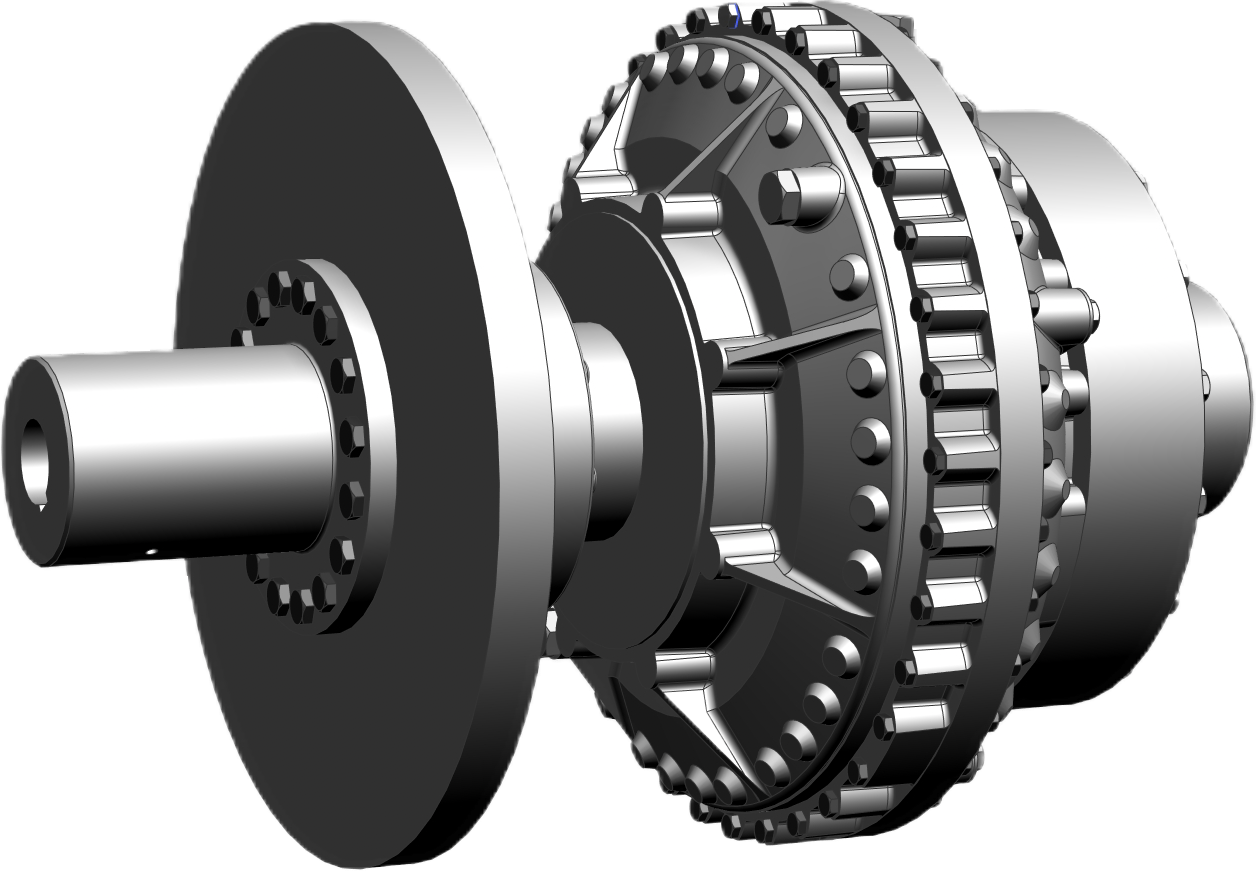
Incline belt conveyors are widely used in mining, quarrying, and bulk material handling to transport material from a lower elevation to a higher point. However, these conveyors suffer from two persistent problems: belt slippage during start‑up and motor overload under heavy or uneven loads. A conventional direct‑on‑line start transmits full motor torque instantly, causing the belt to jerk. If the belt is heavily loaded, it may slip on the drive pulley, leading to belt damage, material spillage, and even motor stall. A Fluid coupling offers a simple, robust solution to both issues. By providing a smooth, controlled torque build‑up and limiting maximum torque, a Hydrodynamic coupling eliminates belt slip and protects the motor from overload. This article explains how a Fluid coupling solves these common incline conveyor problems and why it is the preferred choice for many plant engineers.
Why Incline Conveyors Are Prone to Belt Slippage
When an incline conveyor starts, the motor must overcome both the inertia of the belt and the gravitational force acting on the material. If torque is applied too quickly, the belt may not have enough friction on the drive pulley. The belt then slips, causing excessive wear on the pulley lagging and the belt cover. Repeated slipping can also overheat the belt, reducing its tensile strength. A Fluid coupling addresses this by providing a soft start. The Fluid coupling allows the motor to accelerate to near full speed under low load. Only then does the Hydrodynamic coupling gradually transfer torque to the conveyor. The result is a smooth, shock‑free start with no belt slip. Even when the belt is fully loaded, the Fluid coupling builds torque progressively, giving the belt time to “grip” the pulley.
? Key mechanism: A constant‑fill Fluid coupling has a delayed filling chamber. During start‑up, the oil takes 5‑20 seconds to fill the working chamber, during which the output torque rises slowly. This eliminates the instantaneous torque spike that causes belt slip.
Preventing Motor Overload on Steep Inclines
Another common problem on incline conveyors is motor overload caused by material surge or a jam at the discharge chute. When the load suddenly increases, the motor draws more current. If the overload persists, the thermal protection trips, stopping the conveyor. Frequent overload trips damage the motor windings and cause production delays. A Fluid coupling acts as a built‑in torque limiter. When the load exceeds the Fluid coupling’s design torque, the fluid slips, limiting the torque transmitted to the belt. The motor continues to run without stalling, and the Hydrodynamic coupling prevents the overload from reaching the motor. This gives operators time to clear the jam without damaging the drive. Many Fluid couplings can be filled with a specific oil volume to set the exact torque limit required for the application. For incline conveyors with regenerative braking (downhill sections), a variable‑fill Fluid coupling can also provide controlled retarding, preventing the motor from overspeeding.
Real‑World Case: Limestone Quarry Incline Conveyor
A limestone quarry in Ukraine operated a 350 m incline conveyor with a 18° slope. The 200 kW motor was started directly via a star‑delta starter. Every morning, when the conveyor was empty, the belt slipped on the drive pulley for 2‑3 seconds, causing audible screeching. The belt cover showed signs of premature wear, and the pulley lagging had to be replaced every 8 months. The quarry also experienced two motor overload trips per week due to inconsistent feed from the crusher. After retrofitting with a Dalian Mairuisheng YOX‑650 Fluid coupling, the belt slip disappeared completely. The Hydrodynamic coupling provided a 12‑second soft start, during which the belt accelerated smoothly without any noise. Motor overload trips dropped to zero – the Fluid coupling limited torque whenever a surge occurred, allowing the conveyor to keep running. The quarry calculated a payback period of only 9 months, thanks to reduced belt replacement and eliminated downtime. The maintenance manager stated: “The Fluid coupling transformed our incline conveyor. No more slip, no more trips – just reliable operation.”
• Belt slip eliminated (0 occurrences in 12 months)
• Motor overload trips reduced from 2 per week to 0
• Pulley lagging life extended from 8 months to 28 months
• Energy savings: 12% reduction in peak starting current
Selecting the Right Fluid Coupling for Your Incline Conveyor
When choosing a Fluid coupling for an incline belt conveyor, consider the following factors:
Starting torque requirement – A constant‑fill Fluid coupling with a delayed filling chamber is ideal for most incline conveyors, as it provides a long, soft start.
Power and speed – Select the correct frame size (e.g., YOX series from 360 to 1150) based on motor power and rpm.
Regenerative operation – If the conveyor has a downhill section, choose a variable‑fill Hydrodynamic coupling or add a brake wheel to handle retarding torque.
Environmental conditions – For dusty or hot environments, specify high‑temperature seals and synthetic oil.
Dalian Mairuisheng engineers provide free selection assistance. Just send us your motor power, belt speed, incline angle, and material characteristics. We will recommend the optimal Fluid coupling model, fill volume, and optional features. All our Hydrodynamic couplings come with a 1‑2 year warranty, and we ship worldwide.
Conclusion: A Proven Solution for Incline Conveyor Problems
Belt slippage and motor overload are not inevitable. A properly sized Fluid coupling eliminates both problems at a fraction of the cost of a VFD or a complex clutch system. With over 22 years of experience, Dalian Mairuisheng has supplied thousands of Fluid couplings for incline conveyors in mining, cement, and aggregate plants. Contact us today for a free application review and quote.