

How a Fluid Coupling Extends Crusher and Mill Service Life
2026-04-29 09:09How a Fluid Coupling Extends Crusher and Mill Service Life: Reducing Shock, Current Spikes & Downtime
In heavy industries such as mining, cement, and aggregate processing, **crushers and ball mills** represent some of the most demanding mechanical applications. These machines face extreme inertial loads during startup, frequent torque spikes from irregular feed, and continuous high-vibration operation. Without proper drivetrain protection, motors overheat, gearboxes fail, and shafts crack — leading to costly unplanned downtime. This is where a properly selected Fluid coupling becomes indispensable. In this article, we explain how modern Hydrodynamic couplings (also referred to as Torque Converter‑style power transmission devices) protect crushers and mills, extend component life, and reduce energy waste.
The Crushing Challenge: High Inertia and Impact Loads
A jaw crusher or a ball mill represents a massive rotating mass. When started directly (or with a simple star-delta starter), the motor must overcome this inertia almost instantly, drawing locked-rotor currents 6–8 times higher than normal. This not only stresses the electrical network but also creates severe torsional vibrations that travel through the Coupling into the gearbox and pinion shafts. Over weeks and months, micro-fractures develop, leading to premature tooth breakage or bearing seizure. A Fluid coupling solves this fundamental problem because it allows the motor to accelerate under near‑no‑load conditions. Only after the motor reaches its nominal speed does the Hydrodynamic coupling gradually transfer torque to the crusher. This soft-start characteristic is precisely why many mining operators specify a Torque Converter‑style Fluid coupling for their most critical size-reduction equipment.
Overload Protection: The Internal Fuse That Saves Gearboxes
Crushers and mills are unpredictable: an unexpected piece of metal or a sudden surge of hard ore can spike the load beyond the rated capacity. A rigid Coupling would transmit that overload directly to the motor and gearbox, often causing immediate damage. In contrast, a Fluid coupling has an inherent torque-limiting function. When the output side jams or exceeds the design torque, the internal fluid slip increases, limiting the transmitted torque. The motor continues running without stalling, and the Hydrodynamic coupling protects the entire drivetrain. Some designs, such as delayed‑fill or dual‑chamber Hydrodynamic couplings, even offer a defined “torque converter” region, which temporarily multiplies torque when needed while keeping the motor safe. This self-protecting feature reduces gearbox failures by more than 50% in typical mining installations.
Real‑World Results: Extended Life, Reduced Current Spikes
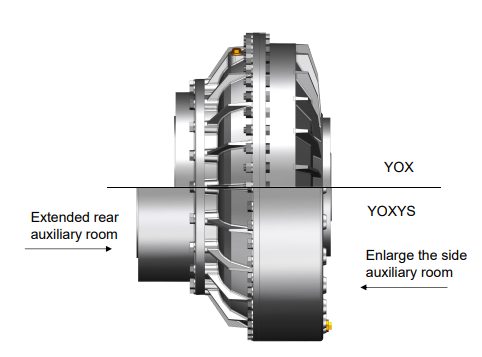
A well-documented case involved a copper mine in Central Asia operating a 250 kW ball mill. The original drive used a rigid Coupling and experienced annual gearbox rebuilds, as well as frequent motor stator burnouts. After retrofitting with a Dalian Mairuisheng constant‑fill Fluid coupling (YOX series), the mine observed:
Peak starting current reduced by 48% – from 1,800 A to 940 A.
Gearbox temperature dropped by 22°C under full load, thanks to reduced torsional vibration.
No gearbox failure in 30 months (previously failures occurred every 12–14 months).
Belt and pinion life increased by 70% due to the elimination of shock loading.
The mine’s maintenance manager stated: “The Fluid coupling transformed our mill drive. We used to see cracked pinion shafts every season; now the only work is routine oil changes. This Hydrodynamic coupling paid for itself in less than six months.”
• Starting current: 600–800% → 150–200% of nominal
• Mechanical shock on gearbox: 8–10x rated torque →<2x rated torque
• Gearbox bearing life: 2-3 years → 8-10 years
• Unplanned downtime: 5-8 events/year → 1 event every 2-3 years
How Torque Converter Principles Apply to Mill Drives
While classic Torque Converter designs are often associated with automotive transmissions, the same hydrodynamic principles are used in industrial Fluid couplings. In a constant‑fill Fluid coupling, the pump wheel and turbine create a fluid vortex that transmits torque without mechanical contact. When the output speed drops (e.g., the crusher meets a hard rock), the slip increases, and the Hydrodynamic coupling automatically adjusts torque multiplication up to a certain ratio. This “Torque Converter effect” is especially valuable for high‑inertia applications such as gyratory crushers and SAG mills. By choosing the correct fill level and chamber geometry, our engineers can tailor the torque‑speed curve to match the specific load profile of your crusher or mill, maximizing both protection and throughput.
Practical Implementation: Retrofitting Without Modifications
One common concern among plant managers is that installing a Fluid coupling requires extensive shaft realignment or foundation changes. In most cases, the answer is no. Dalian Mairuisheng designs its Hydrodynamic couplings to be fully compatible with standard motor and gearbox shafts (ISO or DIN dimensions). The overall length and pilot diameters match those of common rigid or flexible Couplings, enabling a straightforward replacement. For crusher and mill applications, we typically recommend a constant‑fill Fluid coupling with a delayed filling chamber or an external oil supply system for extended start‑ups beyond 30 seconds. Our engineering team provides detailed drawings and on‑site support to ensure a seamless retrofit.
Beyond Protection: Energy Savings and Maintenance Reduction
The advantages of a Fluid coupling extend beyond just mechanical protection. By eliminating high starting currents, the electrical demand charge is reduced, and the risk of voltage dips affecting nearby equipment is minimized. Furthermore, because the Hydrodynamic coupling absorbs torsional vibrations, gearbox oil stays cleaner, bearing temperatures remain lower, and lubrication intervals can be extended. Many customers report a reduction in annual maintenance hours by 30–40% after switching to a Fluid coupling on their primary crusher or ball mill. These operational savings, combined with the extended life of mechanical components, make the Coupling a highly profitable investment.
Customization for Severe Duty
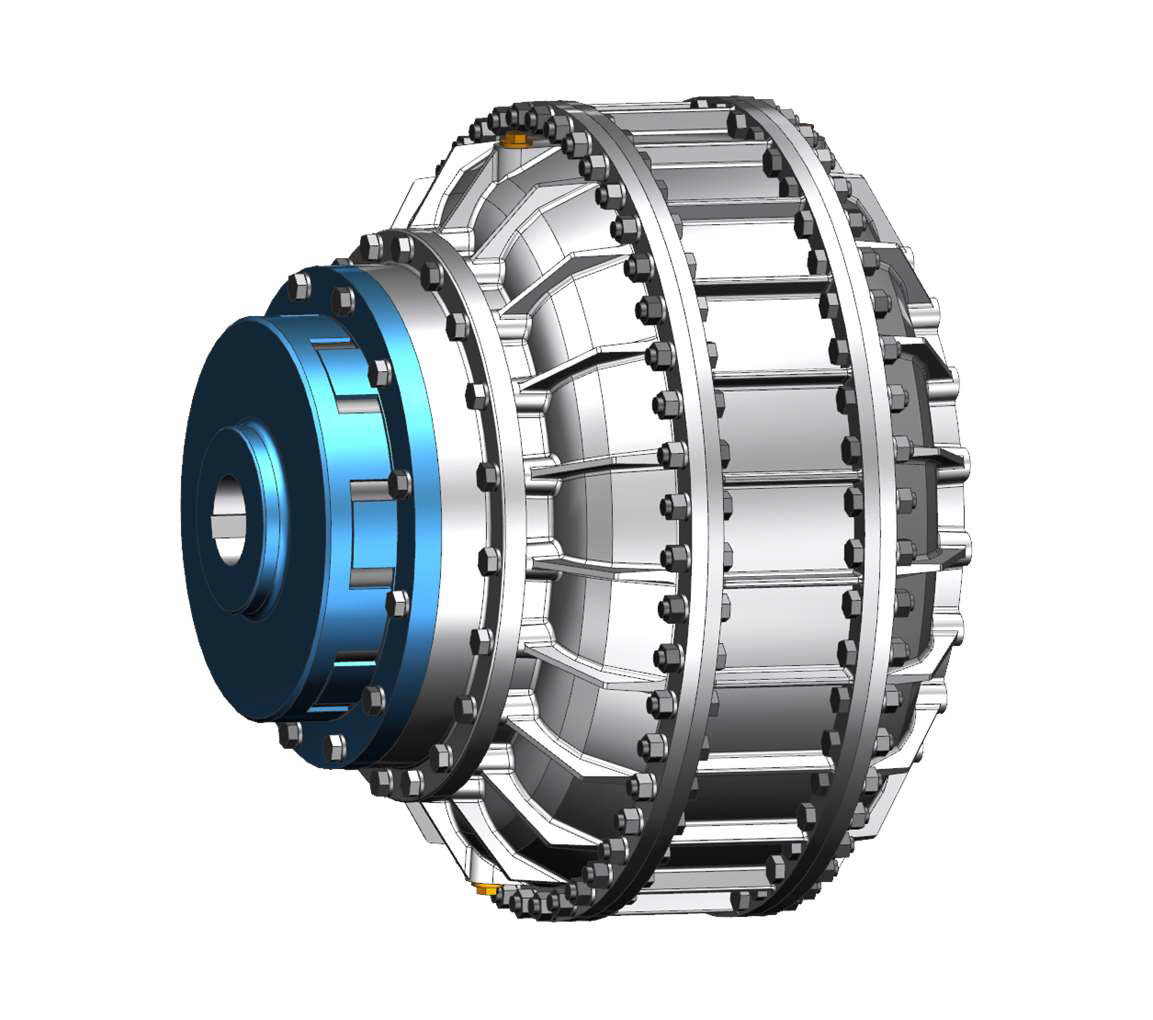
Each mine or cement plant has unique requirements: high altitude, extreme dust, or ambient temperatures above 45°C. Dalian Mairuisheng offers custom-engineered Fluid couplings with special seals, high-temperature Viton® components, and even water-resistant coatings. We can also integrate Hydrodynamic couplings with backstops or disc brakes for inclined conveyors feeding the crusher. Our YOX series and dual‑chamber models are widely used in ball mills, hammer crushers, impact crushers, and vertical roller mills. For each project, we provide free pre‑sale load analysis — just send us your motor power, working cycle, and ambient conditions — and we will recommend the optimal Fluid coupling configuration.
Conclusion: Protect Your Crusher and Mill with the Right Coupling
Driving a crusher or mill without a Fluid coupling is like sending your gearbox to its early grave. The combination of soft-start, torque limiting, and vibration damping makes Hydrodynamic couplings the most reliable solution for demanding size‑reduction equipment. With over 15 years of experience, Dalian Mairuisheng provides high‑quality, cost‑effective Fluid couplings that are fully compatible with major industrial drives. Whether you need a replacement for an existing worn Coupling or are designing a new processing line, our engineers are ready to support you.